If your goal is to lose body fat, you have probably asked yourself one common question. Should you spend more time doing cardio or focus on strength training? It is a debate that has been around for years, and many people still believe that one is clearly better than the other.
The truth is that both cardio and strength training can help you lose fat, but they do it in different ways. Understanding how each type of exercise works will help you create a workout routine that delivers better and faster results. Instead of choosing one over the other, it is important to know when and how to use each effectively.
In this guide, I will explain the difference between cardio and strength training for fat loss, their benefits, and how you can combine both to achieve a leaner and healthier body.
What Is Cardio?
Cardio, also known as aerobic exercise, is any activity that raises your heart rate and keeps it elevated for an extended period. It helps improve heart health, burns calories, and increases endurance.
Some of the most popular cardio exercises include walking, jogging, running, cycling, swimming, rowing, jumping rope, dancing, and hiking.
Many people start their weight loss journey with cardio because it burns calories during the workout. The harder and longer you exercise, the more calories your body uses.
For example, running for thirty minutes usually burns more calories than lifting weights for the same amount of time. This is why cardio has always been associated with fat loss.
What Is Strength Training?
Strength training involves using resistance to make your muscles stronger. This resistance can come from dumbbells, barbells, resistance bands, kettlebells, or even your own body weight.
Common strength exercises include squats, lunges, deadlifts, bench presses, push ups, pull ups, shoulder presses, and rows.
Many beginners avoid lifting weights because they think it is only for building muscle. In reality, strength training is one of the best tools for long term fat loss because it helps preserve and build lean muscle mass.
More muscle means your body burns more calories throughout the day, even when you are resting.
How Cardio Helps with Fat Loss
Cardio is effective because it increases your calorie expenditure. If you burn more calories than you consume, your body starts using stored fat for energy.
Some benefits of cardio include improved heart health, better lung capacity, increased stamina, lower stress levels, and better calorie burning during exercise.
Steady state cardio such as brisk walking or cycling is easy for beginners and can be done regularly without placing too much stress on the body.
High intensity interval training, often called HIIT, is another popular form of cardio. It alternates short bursts of intense effort with brief recovery periods. HIIT workouts are shorter but can burn a large number of calories in less time.
How Strength Training Helps with Fat Loss
Strength training burns calories during the workout, but its biggest advantage comes afterward.
After lifting weights, your body continues using energy to repair muscle tissue. This process increases your daily calorie burn.
Strength training also helps maintain muscle while losing weight. When people lose weight through dieting alone, they often lose muscle along with fat. Losing muscle slows down metabolism, making future fat loss more difficult.
By lifting weights consistently, you protect your muscle mass while encouraging your body to burn stored fat.
Another benefit is improved body shape. Even if the scale does not change quickly, your body composition improves. Your clothes fit better, your waist becomes smaller, and your muscles become more defined.
Cardio vs Strength Training for Fat Loss
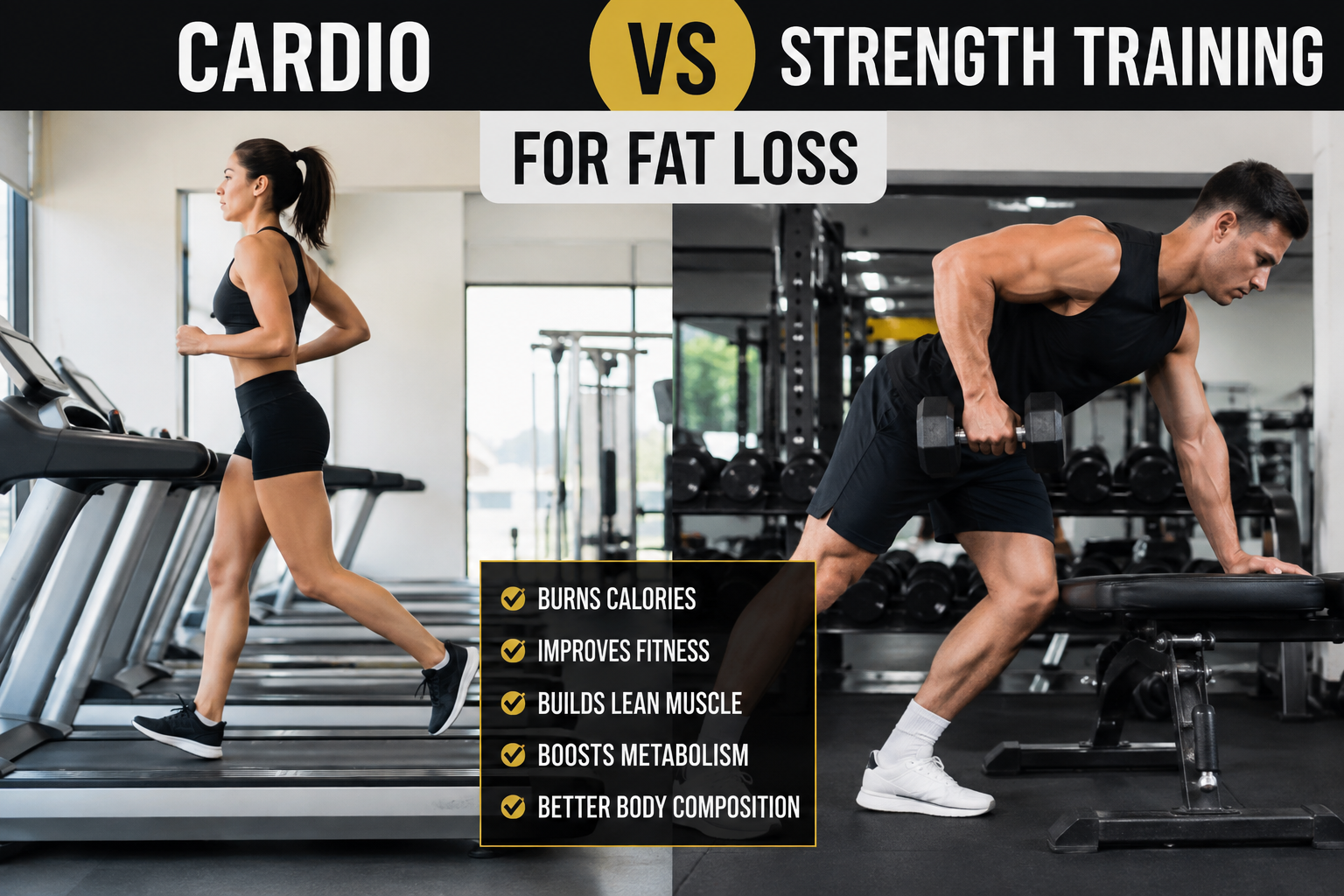
When comparing cardio vs strength training for fat loss, the answer depends on what you measure.
Cardio burns more calories during the workout itself. If you want immediate calorie burning, cardio usually wins.
Strength training burns fewer calories during the session, but it helps increase muscle mass, improve metabolism, and support long term fat loss.
If your goal is only to lose weight quickly, cardio may seem like the better choice.
If your goal is to lose fat while maintaining a toned and healthy body, strength training becomes extremely important.
The most effective fitness plans include both forms of exercise because they complement each other perfectly.
Which Burns More Calories?
Running usually burns more calories per hour than weight lifting.
For example, a person weighing around 70 kilograms may burn approximately:
Walking for one hour can burn around 250 to 350 calories.
Running for one hour can burn around 600 to 900 calories.
Cycling can burn between 400 and 700 calories.
Strength training generally burns between 250 and 500 calories depending on workout intensity.
Although cardio burns more calories during exercise, strength training creates lasting metabolic benefits that continue after the workout ends.
Why Muscle Matters
Many people focus only on the number shown on the scale. However, fat loss is not just about body weight.
Imagine two people who both weigh 75 kilograms.
One has more body fat and less muscle.
The other has less body fat and more muscle.
Even though they weigh the same, the second person looks leaner, stronger, and healthier.
This is why building muscle is essential during any fat loss journey.
More muscle also improves posture, balance, athletic performance, and daily strength.
Is Too Much Cardio Bad?
Cardio is healthy, but doing excessive amounts without proper recovery can create problems.
Too much cardio combined with a strict calorie deficit may increase fatigue, reduce muscle mass, slow recovery, and even increase the risk of injuries.
Some people spend hours on treadmills every day while completely ignoring resistance training. Eventually they lose weight, but they may also lose muscle and experience slower metabolism.
A balanced approach usually produces much better results.
How Often Should You Do Cardio?
For general fat loss, most people benefit from three to five cardio sessions each week.
Beginners can start with brisk walking for thirty minutes.
As fitness improves, cycling, swimming, jogging, or interval training can be added.
Choose activities you enjoy because consistency matters more than intensity.
How Often Should You Lift Weights?
Strength training two to four times each week is enough for most beginners.
Focus on compound exercises that work multiple muscle groups at the same time.
Exercises like squats, deadlifts, bench presses, rows, and shoulder presses provide excellent results because they recruit many muscles and burn more calories.
As your strength improves, gradually increase the weight or repetitions.
Best Workout Plan for Fat Loss
If your primary goal is fat loss, combining both cardio and strength training works best.
A weekly routine might look like this:
Monday can be a full body strength workout.
Tuesday can be a brisk walk or cycling session.
Wednesday can be another strength workout.
Thursday can include light cardio or active recovery.
Friday can be strength training.
Saturday can be HIIT or outdoor activities.
Sunday can be used for rest and recovery.
This combination helps burn calories while protecting muscle mass.
Nutrition Is More Important Than Exercise
No workout can overcome poor eating habits.
Fat loss happens when you consistently consume fewer calories than your body burns.
Eat plenty of lean protein, vegetables, fruits, whole grains, and healthy fats.
Protein deserves special attention because it helps preserve muscle while losing fat.
Drink enough water throughout the day and avoid excessive sugary drinks and processed foods.
Remember that exercise supports fat loss, but nutrition drives it.
Common Mistakes to Avoid
Many people believe cardio alone is enough. While cardio is beneficial, ignoring strength training can reduce long term progress.
Another mistake is lifting weights without challenging yourself. Gradually increasing resistance helps muscles grow stronger and improves fat burning potential.
Skipping recovery is another common problem. Your muscles need time to repair and grow after workouts.
Finally, expecting immediate results often leads to frustration. Fat loss takes patience and consistency.
Which Is Better for Beginners?
Beginners should not choose between cardio and strength training. Instead, they should learn the basics of both.
Walking is an excellent way to improve cardiovascular fitness without putting too much stress on the joints.
Simple bodyweight exercises like squats, push ups, lunges, and planks build strength safely.
As confidence grows, weights and more challenging cardio sessions can be added.
Final Thoughts
When comparing cardio vs strength training for fat loss, there is no single winner. Cardio burns more calories during exercise, while strength training builds muscle, supports metabolism, and improves body composition over time.
The best fat loss strategy combines regular cardio, consistent strength training, healthy eating, quality sleep, and patience.
Instead of asking whether cardio or strength training is better, ask yourself how you can include both in your weekly routine. That balanced approach will help you lose fat more efficiently, maintain muscle, improve overall health, and achieve results that last for years.