
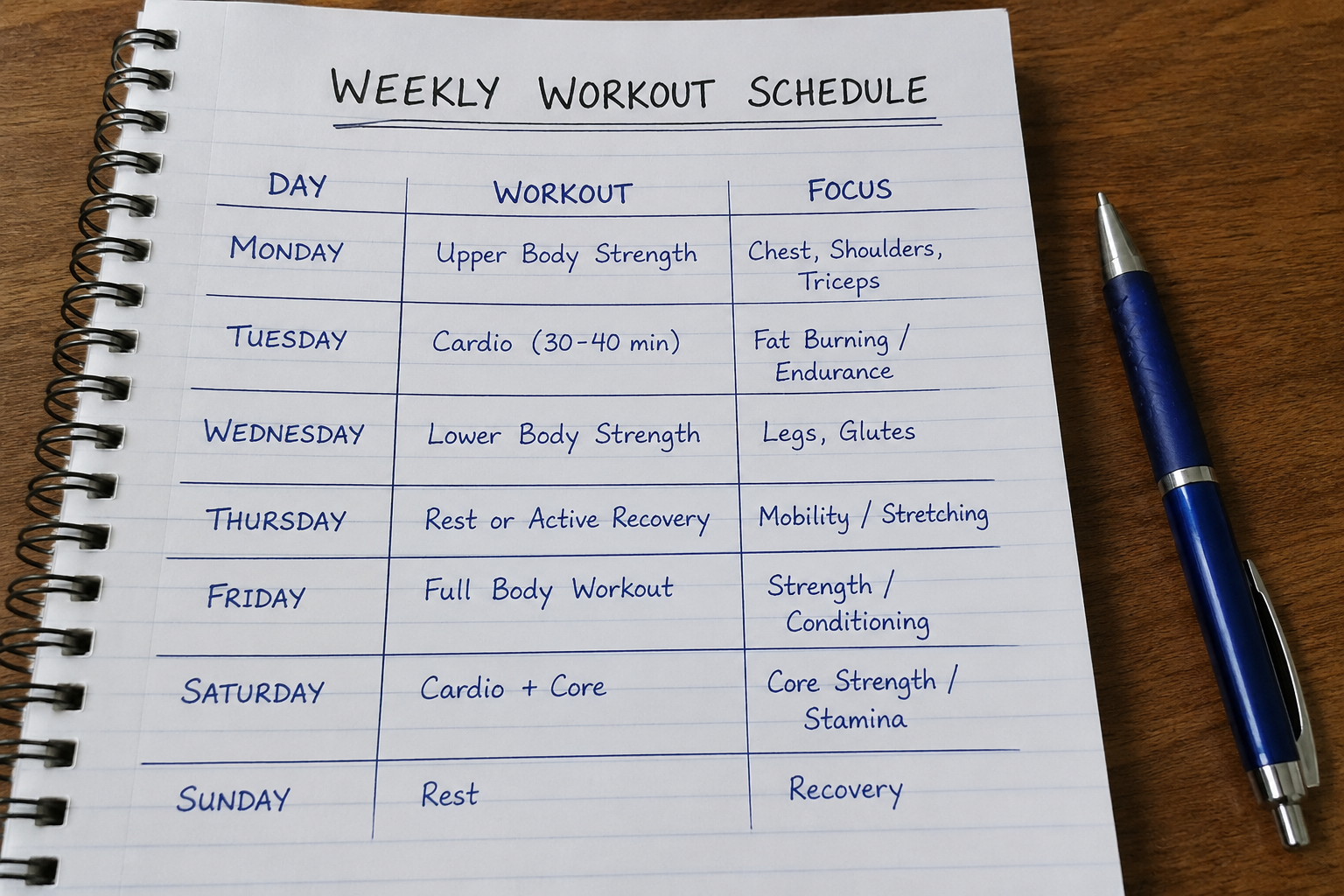
Creating a weekly workout schedule is one of the smartest ways to stay healthy, build strength, and achieve your fitness goals. Many people start exercising with excitement, but after a few weeks, they lose motivation because they do not have a proper plan. A workout schedule gives you direction, helps you stay consistent, and allows your body to recover properly.
Whether your goal is weight loss, muscle gain, improving endurance, or simply staying active, a well planned weekly workout schedule can make a huge difference. In this guide, you will learn how to create a balanced fitness routine that fits your lifestyle and keeps you motivated for the long term.
Why a Weekly Workout Schedule Matters
A workout schedule helps you stay organized. Instead of wondering what exercises to do every day, you already know your plan. This saves time and keeps you focused.
Following a schedule also helps you avoid overtraining. Many beginners make the mistake of working the same muscles every day, which can lead to soreness, fatigue, and even injuries. A balanced plan includes rest days so your muscles can recover and grow stronger.
Another benefit is consistency. Fitness results do not come from one intense workout. They come from showing up every week and following a routine that matches your goals.
Identify Your Fitness Goal
Before creating your weekly workout schedule, decide what you want to achieve.
Your goal will determine the type of workouts you include in your routine.
Some common fitness goals include:
Weight loss
Building muscle
Increasing strength
Improving flexibility
Boosting endurance
General health and fitness
For example, someone trying to lose weight may include more cardio sessions, while someone building muscle will spend more time doing strength training.
Knowing your goal makes it easier to choose the right exercises.
Decide How Many Days You Can Exercise
One of the biggest mistakes people make is creating an unrealistic workout plan.
Be honest about your available time.
If you can only work out three days a week, build a schedule around those three days. It is much better to complete three planned workouts every week than to create a six day routine that you never follow.
Here is a simple guide.
Three days each week is great for beginners.
Four days each week offers a good balance between exercise and recovery.
Five days each week works well for intermediate fitness levels.
Six days each week is suitable for experienced individuals with proper recovery.
Remember that consistency is more important than perfection.
Include Different Types of Exercise
A complete weekly workout schedule should include different forms of exercise.
Strength Training
Strength training builds muscle, increases metabolism, and improves overall body strength.
You can use bodyweight exercises, resistance bands, dumbbells, or gym machines.
Popular strength exercises include squats, lunges, push ups, rows, shoulder presses, and planks.
Aim for two to four strength sessions every week.
Cardio Exercise
Cardio keeps your heart healthy and burns calories.
Examples include walking, jogging, cycling, swimming, rowing, and jumping rope.
Most adults should aim for at least 150 minutes of moderate cardio every week.
Flexibility Training
Stretching helps improve mobility and reduces muscle tightness.
Include stretching after every workout or dedicate one session each week to yoga or mobility exercises.
Recovery Days
Recovery is just as important as exercise.
Rest days allow muscles to repair and grow stronger.
Walking, gentle stretching, and light yoga are excellent recovery activities.
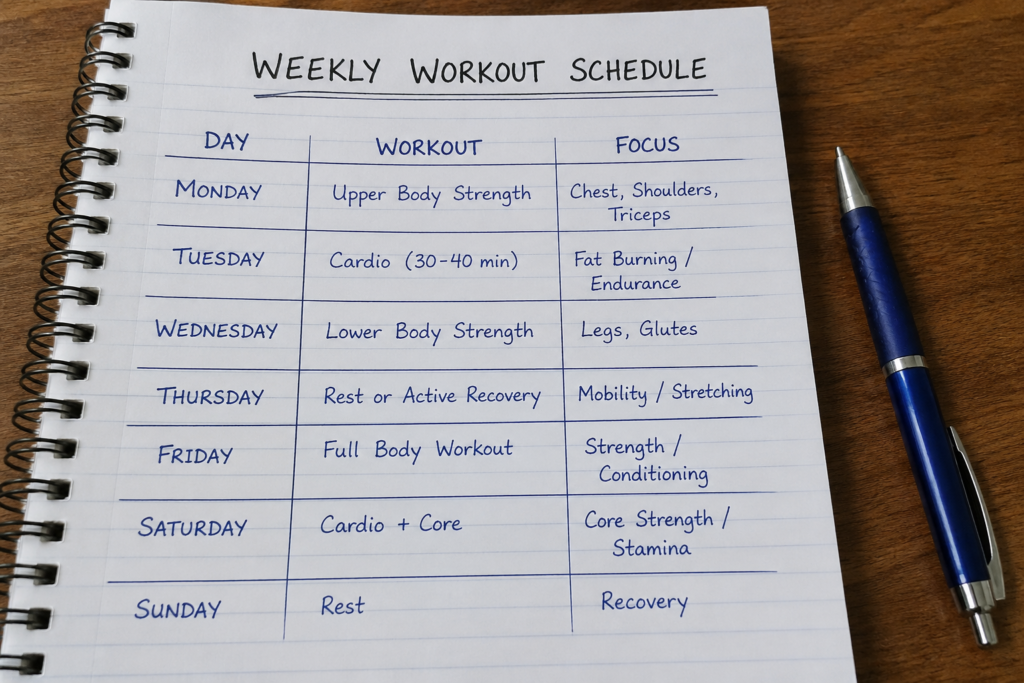
Sample Weekly Workout Schedule for Beginners
Here is a simple weekly workout schedule that works well for most beginners.
Monday
Full body strength training
Tuesday
Brisk walking or light jogging for thirty minutes
Wednesday
Rest or stretching session
Thursday
Upper body strength workout
Friday
Cycling, jogging, or another cardio workout
Saturday
Lower body strength workout followed by stretching
Sunday
Complete rest or an easy walk
This schedule gives your muscles enough time to recover while keeping your body active throughout the week.
Balance Muscle Groups
Avoid training the same muscles every day.
Instead, divide your workouts so each muscle group has time to recover.
For example:
Chest and shoulders
Back and arms
Legs
Core
Full body workouts
This approach reduces the risk of injury and improves muscle growth.
Choose Exercises You Enjoy
One of the best ways to stick with your weekly workout schedule is by choosing activities you actually enjoy.
If you dislike running, try cycling.
If you do not enjoy lifting weights, try resistance bands or bodyweight exercises.
Fitness should never feel like a punishment.
The more enjoyable your workouts are, the easier it becomes to stay consistent.
Warm Up Before Every Workout
A proper warm up prepares your body for exercise.
Spend five to ten minutes doing light movement before every workout.
Good warm up exercises include:
Walking
Jumping jacks
Arm circles
Bodyweight squats
Leg swings
A warm up increases blood flow, improves flexibility, and lowers the chance of injury.
Cool Down After Exercise
Many people skip the cool down, but it plays an important role in recovery.
Spend five to ten minutes stretching the muscles you worked during your session.
Deep breathing and gentle stretching help reduce stiffness and improve flexibility.
Track Your Progress
Keeping track of your workouts helps you stay motivated.
You can record:
Workout duration
Exercises completed
Number of sets
Repetitions
Weight lifted
Energy levels
Body measurements
Looking back at your progress reminds you how far you have come and encourages you to keep going.
Adjust Your Workout Schedule
Your workout routine should change as your fitness improves.
If the exercises become too easy, increase the challenge by:
Adding more weight
Increasing repetitions
Performing extra sets
Reducing rest time
Trying more advanced exercises
Making small adjustments helps prevent fitness plateaus.
Listen to Your Body
Your body gives important signals.
Feeling slightly tired after exercise is normal.
Sharp pain, dizziness, or excessive fatigue are warning signs.
Take an extra rest day if needed.
Recovery is part of the fitness process and should never be ignored.
Stay Consistent
The secret to success is not having the perfect workout schedule.
The real secret is following your schedule week after week.
Missing one workout is not a problem.
The important thing is getting back on track instead of giving up completely.
Small consistent efforts always produce better results than occasional intense workouts.
Nutrition Supports Your Workout Schedule
Exercise alone cannot produce the best results.
Eating nutritious foods helps fuel your workouts and speeds up recovery.
Focus on:
Lean protein
Whole grains
Fresh fruits
Vegetables
Healthy fats
Drink enough water throughout the day to stay hydrated.
A healthy diet and a consistent workout schedule work together to improve your fitness.
Common Mistakes to Avoid
Many beginners make simple mistakes that slow their progress.
Trying to exercise every day without rest.
Skipping warm ups.
Ignoring recovery.
Doing the same workout every session.
Having unrealistic expectations.
Comparing themselves to others.
Avoiding these mistakes helps you stay healthy and motivated.
Tips for Staying Motivated
Set realistic weekly goals.
Prepare your workout clothes in advance.
Exercise at the same time every day.
Find a workout partner.
Celebrate small achievements.
Take progress photos every month.
Remember why you started your fitness journey.
Motivation comes and goes, but building a routine creates lasting habits.
Create a Schedule That Fits Your Lifestyle
The best weekly workout schedule is one that matches your daily life.
If you work long hours, shorter workouts may be more realistic.
If you have more free time on weekends, plan longer sessions then.
There is no perfect workout schedule that works for everyone.
Your routine should be flexible enough to fit your responsibilities while still helping you stay active.
Final Thoughts
Learning how to create a weekly workout schedule is one of the most important steps toward achieving lasting fitness results. A balanced routine that combines strength training, cardio, flexibility, and recovery will help you improve your health while reducing the risk of injury. Start with a realistic plan, stay consistent, and adjust your workouts as your fitness level improves. Over time, your weekly workout schedule will become a natural part of your lifestyle, making it easier to reach your goals and maintain a healthier, stronger body for years to come.