If you want better performance, fewer injuries, and faster recovery, adding the best stretching exercises before and after workouts to your fitness routine is one of the smartest things you can do. Many people spend hours lifting weights or doing cardio but completely ignore stretching. That small mistake can lead to muscle tightness, poor flexibility, and unnecessary soreness.
I used to think stretching was only for athletes or yoga lovers. After making it a daily habit, I noticed that my workouts felt smoother, my body recovered faster, and I had fewer aches after training. Stretching does not take much time, but the benefits are worth every minute.
In this guide, I will explain the best stretching exercises before and after workouts, why they matter, and how you can include them in your daily routine for better fitness results.
Why Stretching Is Important
Stretching prepares your muscles and joints for movement. It improves flexibility, increases blood flow, and helps your body move through a full range of motion.
Before a workout, stretching wakes up your muscles and prepares them for exercise. After your workout, stretching helps your muscles relax, reduces stiffness, and supports recovery.
People who stretch consistently often experience better posture, improved balance, and greater overall mobility.
Dynamic Stretching Before Workouts
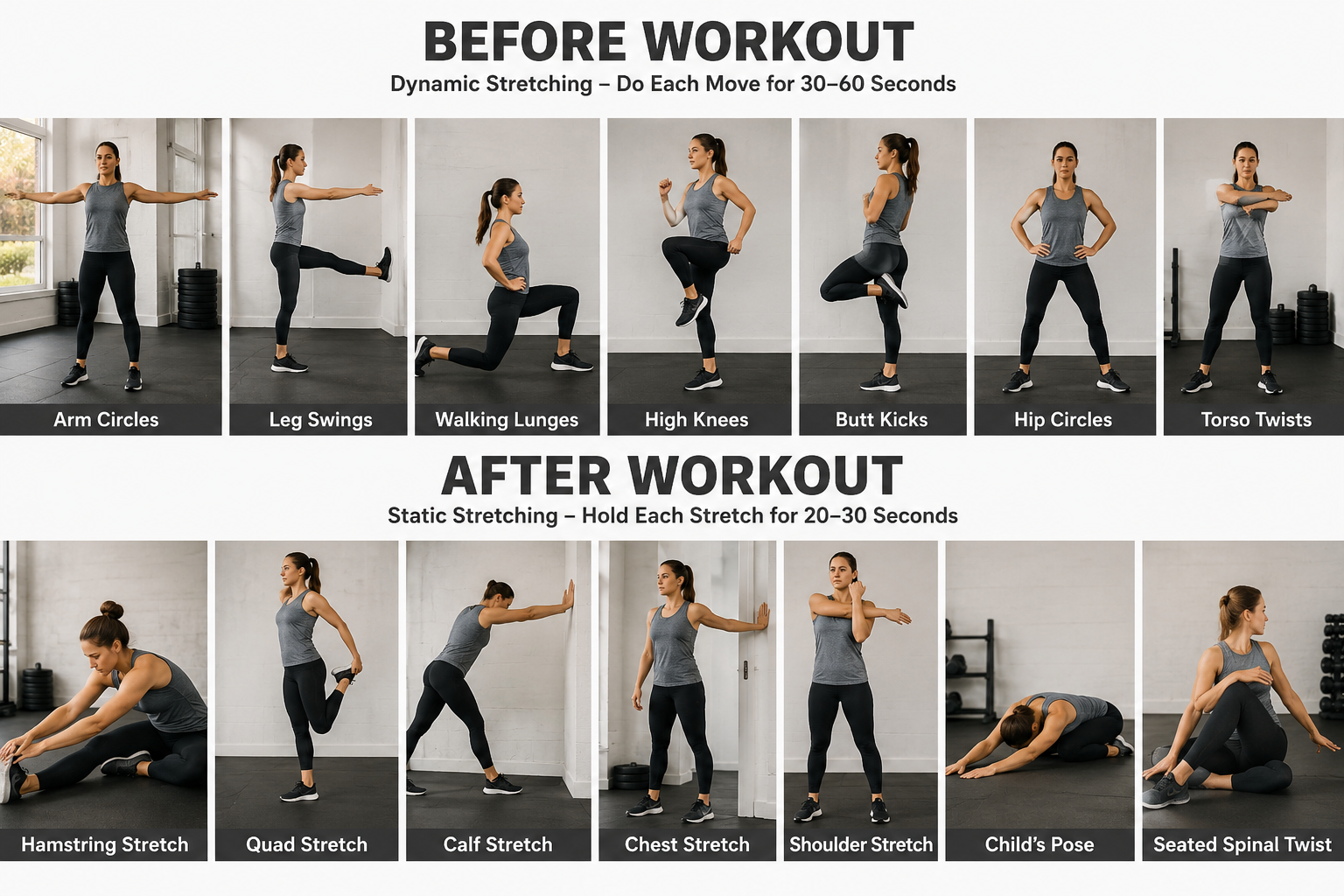
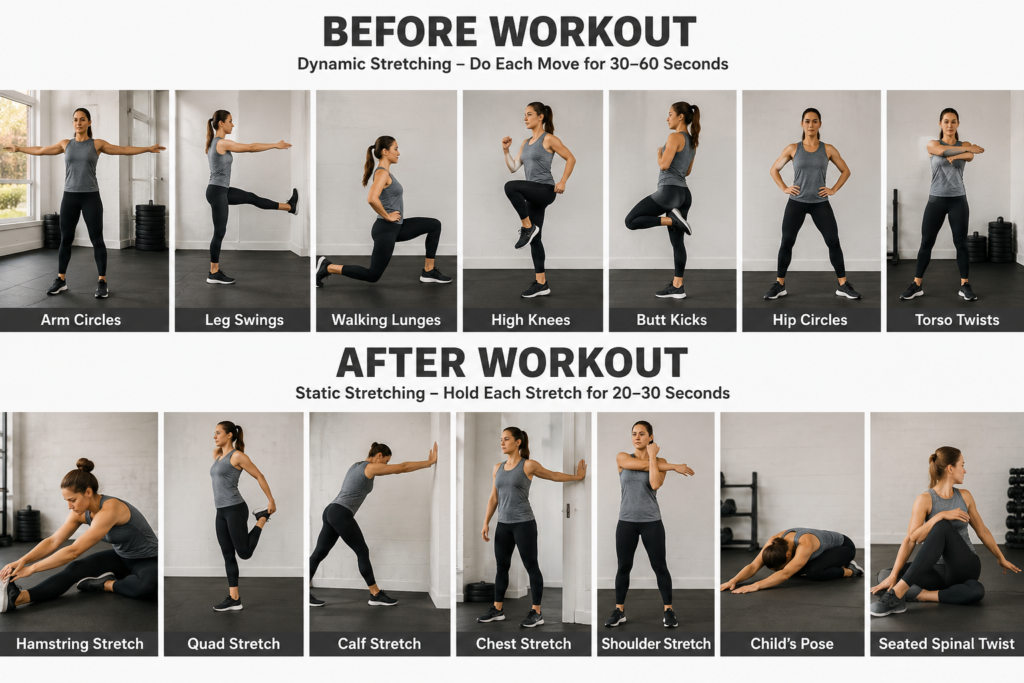
Before exercising, focus on dynamic stretching. Dynamic stretches involve controlled movements that warm up your muscles instead of holding one position for a long time.
These exercises increase your heart rate and prepare your body for physical activity.
Arm Circles
Arm circles are excellent for warming up your shoulders, chest, and upper back.
Stand with your feet shoulder width apart. Extend both arms to your sides and slowly make small circles. Gradually increase the size of the circles. Reverse the direction after about 20 seconds.
This simple movement improves shoulder mobility and prepares your upper body for strength training.
Leg Swings
Leg swings activate your hips, hamstrings, and glutes.
Stand beside a wall for support. Swing one leg forward and backward in a controlled motion. Repeat 15 to 20 swings before switching legs.
You can also swing your leg side to side to improve hip flexibility.
Walking Lunges
Walking lunges stretch your hip flexors while activating your legs and core.
Take a large step forward and lower your back knee toward the ground. Push through your front foot and continue walking forward.
Perform 10 lunges on each leg.
High Knees
High knees increase body temperature while loosening your hips and legs.
Jog in place while lifting your knees as high as possible. Keep your core tight and move your arms naturally.
Continue for 30 seconds.
Butt Kicks
Butt kicks warm up your hamstrings and calves.
Jog slowly while bringing your heels toward your glutes with each step.
Perform this movement for 30 to 45 seconds.
Hip Circles
Healthy hips are essential for almost every exercise.
Stand with your hands on your hips and slowly rotate your hips in large circles. Complete 10 circles in each direction.
This movement improves hip mobility and reduces stiffness.
Torso Twists
Torso twists prepare your spine and core for movement.
Stand with your feet shoulder width apart and gently rotate your upper body from side to side.
Continue for about 30 seconds.
Static Stretching After Workouts
After your workout, your muscles are warm and ready for static stretching. Static stretches involve holding a position for 20 to 30 seconds without bouncing.
These stretches help improve flexibility and reduce muscle tightness.
Hamstring Stretch
Sit on the floor with one leg extended and the other bent inward.
Reach toward your toes while keeping your back straight. Hold the stretch without forcing the movement.
Repeat on the opposite side.
Standing Quad Stretch
Stand on one leg and pull your opposite foot toward your glutes.
Keep your knees close together and your chest upright.
Hold for 30 seconds before switching legs.
Calf Stretch
Stand facing a wall with one foot behind the other.
Keep your back leg straight and press your heel into the floor.
Lean forward until you feel a stretch in your calf.
Repeat on both sides.
Chest Stretch
Stand in a doorway and place your forearms against the frame.
Step forward slowly until you feel a stretch across your chest and shoulders.
Hold for 20 to 30 seconds.
Shoulder Stretch
Bring one arm across your chest and gently pull it closer with your opposite hand.
Keep your shoulders relaxed throughout the stretch.
Repeat on both arms.
Child’s Pose
Child’s Pose is one of the best stretches for your lower back, hips, and shoulders.
Kneel on the floor, sit back on your heels, and extend your arms forward while lowering your chest.
Take slow, deep breaths as you relax into the stretch.
Seated Spinal Twist
Sit with one leg extended and cross your other foot over it.
Twist your upper body toward the bent knee while keeping your spine tall.
Hold for 30 seconds before switching sides.
Best Stretching Routine Before Workouts
If you have only five to ten minutes before exercising, this routine works well.
Start with arm circles for 30 seconds.
Move to leg swings for one minute.
Perform walking lunges for one minute.
Continue with high knees for 30 seconds.
Finish with butt kicks, hip circles, and torso twists.
This warm up prepares your entire body for strength training, running, or sports.
Best Stretching Routine After Workouts
After finishing your workout, spend about ten minutes cooling down.
Stretch your hamstrings for 30 seconds on each side.
Stretch your quadriceps for 30 seconds.
Perform the calf stretch for 30 seconds.
Stretch your chest and shoulders.
Finish with Child’s Pose and a seated spinal twist.
Your muscles will thank you the next day.
Common Stretching Mistakes
Many people stretch incorrectly without realizing it.
One common mistake is stretching cold muscles. Always warm up your body before performing deep stretches.
Another mistake is bouncing during static stretches. Bouncing increases the risk of muscle strain.
Holding your breath also limits relaxation. Slow breathing allows your muscles to release tension naturally.
Many people rush through stretching. Spending just five to ten focused minutes can make a noticeable difference.
Lastly, never push through sharp pain. Stretch until you feel gentle tension, not discomfort.
Benefits of Stretching Every Day
You do not have to exercise every day to enjoy the benefits of stretching.
Daily stretching can improve flexibility, posture, and joint health. It also helps reduce stress because slow stretching encourages deep breathing and relaxation.
People who spend long hours sitting at work often develop tight hips, stiff shoulders, and lower back pain. A few minutes of stretching every day can reduce these common problems.
As flexibility improves, everyday activities like walking, bending, lifting, and climbing stairs become easier.
How Long Should You Stretch
For dynamic stretching before workouts, spend about five to eight minutes moving through different exercises.
For static stretching after workouts, aim for eight to ten minutes.
Hold each stretch for 20 to 30 seconds and repeat if needed.
Consistency matters more than spending a long time in one session.
Stretching for Different Types of Workouts
Your stretching routine should match your workout.
If you plan to run, focus on your calves, hamstrings, hips, and ankles.
For weight training, prepare the muscles you plan to train that day. Upper body workouts should include shoulder and chest mobility, while leg days should emphasize hips, hamstrings, and quadriceps.
If you enjoy cycling, spend extra time stretching your hip flexors, calves, and lower back after your ride.
For full body workouts, include stretches that target every major muscle group.
Tips to Make Stretching a Habit
The easiest way to stay consistent is to include stretching as part of every workout instead of treating it as an extra task.
Keep your stretching routine simple.
Focus on quality instead of quantity.
Use slow, controlled movements.
Listen to your body.
Stay hydrated because well hydrated muscles recover more efficiently.
Over time, stretching becomes just as natural as exercising itself.
Final Thoughts
The best stretching exercises before and after workouts can improve your performance, increase flexibility, reduce soreness, and lower your risk of injury. Dynamic stretches prepare your body for movement, while static stretches help your muscles recover after exercise.
You do not need expensive equipment or long stretching sessions to enjoy the benefits. Just ten to fifteen minutes before and after your workout can make a significant difference in how your body feels and performs.
If you want stronger muscles, better mobility, and faster recovery, make stretching a regular part of your fitness routine. Your body will move better, recover faster, and help you stay active for years to come.